


What happens when creating content becomes easier than ever, but getting people to care about it becomes increasingly difficult?
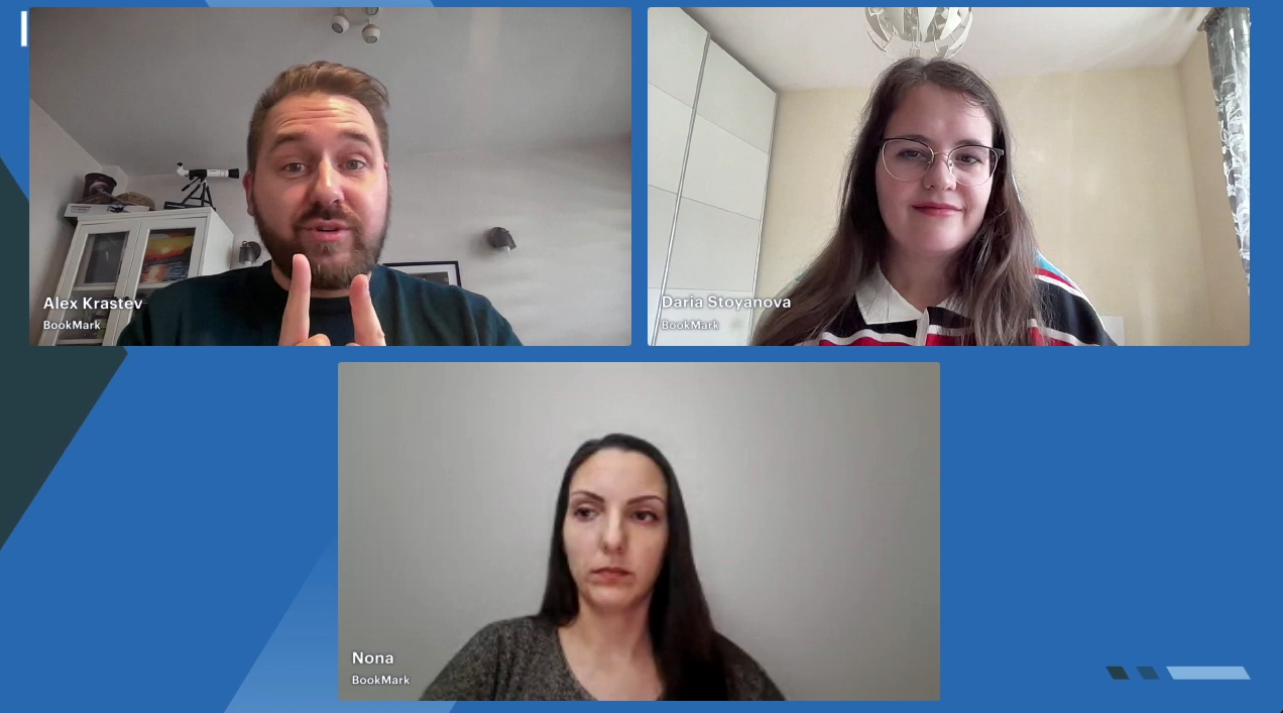
In the November edition of Ask Us Anything About LinkedIn, BookMark’s Alex, Dari and Nona explored a question that’s becoming increasingly relevant for brands and professionals alike: how do you stand out when AI makes it possible for everyone to produce more content, faster?
More Content, More Video, More Competition for Attention
LinkedIn continues to grow as a content platform. According to figures shared by LinkedIn’s new CEO, Dan Shapero, following Microsoft’s latest quarterly earnings announcement, time spent consuming content increased by 15% year over year. Paid video ads grew by 25%, while ads featuring creators saw a 63% increase.
These numbers point towards a platform increasingly focused on video, creators and content that encourages people to spend more time engaging.
But more content doesn’t necessarily mean better content. As AI-generated posts, images and videos become increasingly common, brands face a different challenge: creating something people actually want to engage with. And the answer may have less to do with production volume and more to do with the people behind the communication.
When Digital Fatigue Makes Human Design More Valuable
We’ve reached an interesting point in our relationship with technology. After years of developing tools designed to keep us connected and scrolling, we’re now seeing products that help us disconnect.
One example discussed during the episode was Brick, a physical device that allows users to restrict selected apps on their phones. To regain access, they have to physically return to the device and tap their phone against it.
It’s a curious illustration of digital fatigue, but it also raises a question for marketers: if people are actively trying to consume less, why are brands so determined to produce more?
The visual side of this problem is becoming particularly noticeable. When companies rely on similar AI prompts, their images can start looking interchangeable, gradually losing the personality that made their brands recognisable.
Interestingly, design styles that once seemed ordinary are finding new appreciation precisely because they look human-made. Less polished photographs, traditional graphic design and original creative work can communicate something that technically impressive AI visuals often struggle to deliver: a sense of genuine human involvement.
This doesn’t mean abandoning professional design. It means reconsidering whether every visual needs to be perfectly polished to be effective.
Thought Leadership Is About Having Something Worth Saying
In a world where anyone can generate an expert-sounding LinkedIn post with a few clicks, sounding knowledgeable is no longer enough.
What becomes more valuable is the ability to offer a perspective grounded in experience, explain complex processes and challenge familiar industry assumptions.
That’s where thought leadership comes in. Rather than simply sharing information, thought leaders help their audiences understand why something matters. Their credibility comes from decisions they’ve made, problems they’ve solved and insights they can offer that aren’t easily reproduced by an AI tool.
Thought Leader Ads allow companies to promote content published by individuals, making personal expertise part of their advertising strategy. One approach discussed during the episode was to identify posts that already perform well organically and then use them in paid campaigns.
Video plays an important role here, particularly talking-head videos, interviews and podcast excerpts that allow audiences to connect with the person delivering the message.
However, reaching more people isn’t the same as reaching the right people. LinkedIn’s targeting options, including company lists, professional roles and seniority, allow brands to connect thought leadership campaigns with specific business audiences.
The goal isn’t simply visibility. It’s meaningful visibility among people who matter to the business.
Are LinkedIn Company Pages Becoming Less Important?
If people increasingly want to hear from people, what happens to the Company Page? The short answer is that it isn’t going anywhere. But its role is changing.
For years, many businesses treated their Company Page as their primary, sometimes only, channel for communicating on LinkedIn. Looking towards 2027, a more connected approach is emerging.
The Company Page provides the brand’s identity, credibility and continuity. Personal profiles contribute expertise, relationships and individual perspectives. Neither needs to replace the other. Instead, they should work together to present a fuller picture of the organisation.
This also changes how companies should approach employee advocacy. Encouraging employees to participate on LinkedIn doesn’t mean asking everyone to publish identical, marketing-approved posts.
People need room to develop their own voices, and participation should remain voluntary. For some, that might mean publishing regularly. For others, it could begin with commenting on relevant conversations or sharing occasional professional experiences.
The objective isn’t to turn every employee into a content creator. It’s to make the company’s collective expertise more visible without removing the individuality that makes it valuable.
Company Pages Need Better Stories, Not Just More Updates
There is still plenty of room for storytelling on Company Pages. The problem is that many businesses approach their content like a sequence of press releases. A new office opens, a project reaches a milestone, an event takes place, and another carefully worded announcement appears in the feed.
But what decisions led to the project? Who made it possible? What challenges did the team overcome? What did people learn along the way? These details give audiences a reason to care and allow the company’s personality to emerge.
The same principle applies to personal thought leadership. Stories about decisions, industry perspectives and behind-the-scenes experiences can demonstrate expertise far more effectively than generic statements about professional success.
To help professionals explore this approach, the BookMark team also prepared a short guide covering five types of stories suitable for thought leadership on LinkedIn.
Is Human-Made Creativity Becoming the New Luxury?
As AI makes visual production accessible to almost everyone, brands investing in hand-drawn animation, stop-motion techniques and original creative teams may find new ways to differentiate themselves.
Luxury fashion campaigns were among the examples discussed, with brands such as Prada and Dior exploring visually distinctive creative approaches.
But the discussion also highlighted an important complication: audiences are becoming increasingly critical of how brands use AI, particularly when something is presented as entirely handmade.
The issue isn’t necessarily whether AI was involved. It’s whether the brand is being transparent about its involvement.
AI can support creative production, but claiming something is exclusively human-made when it isn’t risks undermining the very trust the campaign is trying to build.
As audiences become more familiar with AI-generated visuals, originality and honesty about the creative process may matter just as much as the finished result.
The November conversation brought together several trends that, at first glance, might seem separate: digital detox, human-made design, thought leadership, employee advocacy and the changing role of Company Pages.
Producing content is becoming easier. Building trust, offering a distinctive perspective and creating meaningful connections still require human effort.
For brands preparing their LinkedIn strategies for 2027, that means thinking beyond publishing frequency and polished visuals. It means finding the right people to represent their expertise, making room for individual voices and telling stories that audiences genuinely want to follow.
Watch the full November episode of Ask Us Anything About LinkedIn on YouTube or listen on Spotify, and join us again in December 4th for another round of LinkedIn news, questions and conversations.