



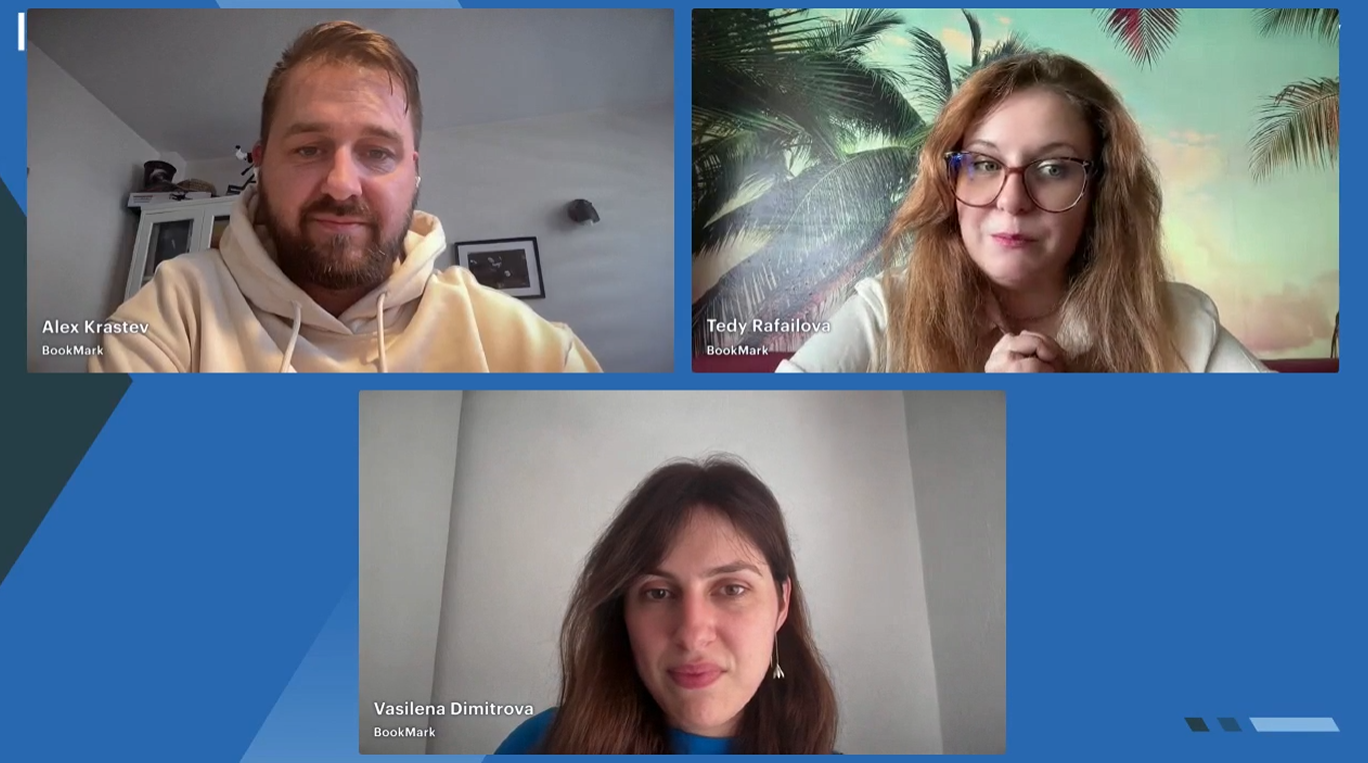
The latest edition of Ask Us Anything About LinkedIn brought together Tedy, Alex and Vasilena for a conversation about something that keeps appearing across very different parts of the platform: the growing value of being recognizably human.
From LinkedIn’s shift away from automated outreach and towards trusted professional voices to changing expectations around B2B design and AI-assisted content creation, the episode looked at what happens when polished and scalable is no longer enough. As more content becomes easier to produce, credibility, specificity and a voice people can actually recognize become much harder to replace.
LinkedIn Is Moving From Automation to Authority
The episode came shortly after the announcement that Ryan Roslansky will leave Microsoft and LinkedIn at the end of the year, closing an important chapter for the platform. We reflected on Roslansky’s role in shaping LinkedIn into the social network we know today, while also pointing to the more informal and authentic communication style already associated with incoming CEO Dan Shapero.
That question of authenticity also runs through one of LinkedIn’s latest developments: the new Creator Discovery tool currently being tested by the platform. As Tedy explained, the feature will help brands identify creators using criteria relevant to B2B, including industry, job function, content type and audience demographics.
The tool itself, however, is only one part of a wider change. For years, LinkedIn growth was often reduced to volume: build a database, automate connection requests and messages, reach enough decision-makers and wait for something to work. LinkedIn has increasingly pushed against this kind of behavior while investing more heavily in the people whose expertise can influence professional decisions.
For brands, that puts authority in a very different place. It is not simply about reaching more people, but about finding credible voices that audiences already have a reason to trust and giving those voices greater visibility.
B2B Design Is Becoming More Human
The same change is visible in the way brands present themselves. As Vasi put it, “less corporate” does not mean less professional. The highly polished templates, staged executive videos and familiar stock imagery traditionally associated with professional communication are increasingly making room for real workplaces, products, events and people.
There is a practical reason for that shift. When audiences are surrounded by increasingly polished AI-generated content, small imperfections can actually make communication more believable. A natural pause in a video or an imperfect photograph from an actual event can reveal more about a company than another flawless visual ever could.
Vasilena compared what is happening with AI imagery today to the evolution of stock photography. Stock once offered businesses an affordable way to access professional visuals, until the same handshakes, offices and carefully staged smiles started appearing everywhere. AI imagery risks following the same trajectory: technically impressive, instantly available and increasingly difficult to distinguish from everything around it.
A photograph of the actual team, factory, product or event offers something generated imagery cannot recreate quite as easily: visual proof that something really happened.
The Designer’s Role Is Changing Too
This does not make design less important. It changes what good design needs to accomplish. Vasi described designers increasingly as editors rather than people whose job is simply to make something look more impressive. The question becomes less about what else can be added to a visual and more about what deserves attention, what can be removed and what makes the final result believable.
AI can still have a place in that process, but as a tool rather than a replacement for the source material. It can clean up an image, extend a background, resize content or solve practical production problems without replacing the real person, place or product at the centre of the story.
Even Canva received an unexpected redemption arc during the episode. For smaller teams and professionals without an in-house designer, its templates and built-in design principles can sometimes provide a more consistent starting point than generating an entirely new visual with AI. And even at BookMark, some design systems have moved into Canva when flexibility and speed matter more than having hundreds of layers in a file.
Creating Content Doesn’t Have to Be That Hard
Visual perfection is not the only thing stopping people from publishing. Alex brought up three questions he repeatedly hears during LinkedIn trainings: What should I post? Who wants to hear what I have to say? Why would anyone listen to me if I’m not an influencer?
Those doubts often turn into self-censorship before a post has even been written. His advice was much simpler: start short, start easy and think about LinkedIn participation rather than posting alone. For some professionals, a thoughtful comment may be a much better starting point than forcing themselves into a publishing routine.
Alex then demonstrated his own approach live. He has built a dedicated ChatGPT conversation around examples of his writing, teaching it his preferred structure, tone and criteria for evaluating a post. Instead of asking AI to invent an opinion for him, he dictates the idea himself and lets the tool help turn it into a usable draft.
The distinction is important. The starting point remains the person’s own experience and opinion. AI removes some of the friction between having an idea and publishing it, but it should not make everyone sound identical. As Alex put it during the episode, your LinkedIn posts should sound the way you sound in real life.
That also means knowing when to stop polishing. Not every post needs to be engineered for virality, and another forty minutes spent chasing a slightly better score will not necessarily make the idea more useful. Sometimes the better habit is simply to publish.
AI Should Enhance, Not Replace
For all three topics, the same principle kept resurfacing. LinkedIn is putting more emphasis on credible people. B2B design is moving closer to real people and real environments. And AI works best when it helps professionals communicate their own ideas instead of producing those ideas for them.
If you missed this edition of Ask Us Anything About LinkedIn, you can catch the full episode on Spotify and YouTube. And if you already have a question for the next edition, send it our way and join us live on November 6.

